
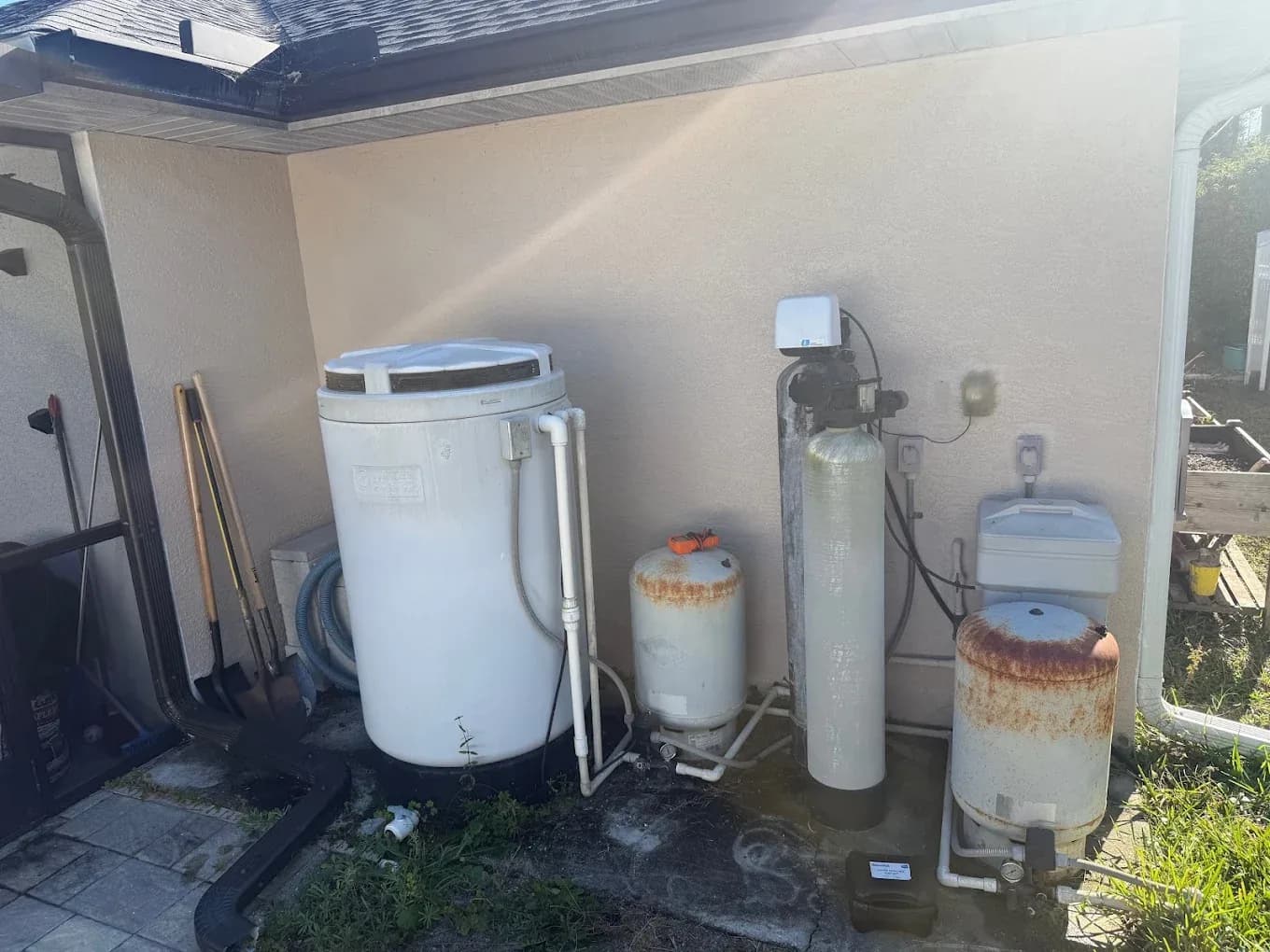
Well water pressure usually drops because the pressure tank, pressure switch, filter, pump, or plumbing is not keeping steady flow. If the pressure falls only during heavy use, the well may be recovering slowly or the system may be undersized for the demand.
For homeowners and property owners in the Oasis Well Service area, low pressure is one of the most common early signs that a well system needs attention. It does not always mean the well is failing. Often, the issue is a part that can be tested and corrected before the home loses water completely.
What does normal well water pressure look like?
Many residential well systems are set to turn the pump on at about 40 psi and off at about 60 psi. Some systems use a 30/50 setting, especially in older homes or smaller systems.
That range matters because the pressure switch tells the pump when to start and stop. If the switch is dirty, worn, or out of adjustment, the pump may turn on late, shut off too soon, or cycle too often.
A quick pressure gauge reading can tell a lot. If the gauge drops sharply when a faucet opens, the tank may not be holding enough usable water. If the gauge looks normal but the faucet pressure is weak, the problem may be a clogged filter, softener, fixture screen, or line restriction.
Could the pressure tank be the problem?
Yes. A pressure tank stores water under air pressure so the pump does not have to start every time someone opens a faucet. When the tank loses air charge, has a damaged bladder, or becomes waterlogged, pressure can surge and fade.
Common pressure tank symptoms include:
- Water pressure that pulses up and down
- The pump clicking on and off quickly
- Good pressure for a few seconds, then a fast drop
- A pressure gauge that jumps instead of moving smoothly
- A pump that runs more often than it used to
Short cycling is especially important. It can wear out the pump control parts and shorten pump life because the motor is starting over and over. Oasis Well Service can test the tank, check the air charge, and confirm whether the tank is the source of the pressure loss.
Could a clogged filter make the whole house feel weak?
Yes. A clogged sediment filter is one of the simpler causes of low water pressure. If the whole home pressure drops after a filter change is overdue, the filter may be full of sand, rust, iron, or fine silt.
This is especially likely if pressure is stronger before the filter and weaker after it. The same thing can happen with water softeners, treatment units, aerators, and fixture screens.
The useful clue is location. If one sink is weak, check that fixture first. If every faucet is weak, check the well system, main filter, and treatment equipment.
Could the pump be wearing out?
It can be. A worn pump may still move water, but not at the pressure or volume the home needs. That can show up as slow recovery after showers, poor flow when more than one fixture is running, or pressure that never reaches the shutoff setting.
Pump issues can also come from electrical problems, a failing control box, worn wiring, a blocked intake, or a leak in the drop pipe. The pump is only one part of the system, so it is usually better to test before replacing it.
A good diagnostic visit should confirm voltage, pressure switch operation, tank condition, flow rate, and whether the pump reaches the expected pressure. That prevents replacing an expensive part when a smaller repair would solve the issue.
Could the well itself be running low?
Sometimes. If pressure drops during laundry, irrigation, long showers, or multiple fixtures running at once, the well may not be recovering as fast as water is being used.
This is different from a pressure tank problem. A low-producing well may deliver water normally at first, then fade as demand continues. After the system rests, pressure may return.
Common causes include seasonal groundwater changes, drought, sediment buildup, pump depth, or a well that was never sized for current household use. Oasis Well Service can help separate a water supply issue from a mechanical pressure issue.
What should I check before calling for service?
Start with simple, safe observations:
- Look at the pressure gauge while water is running
- Check whether the problem affects one fixture or the whole home
- Replace a dirty sediment filter if it is due
- Note whether pressure drops during heavy use only
- Listen for the pump starting and stopping rapidly
- Check whether the breaker has tripped or reset recently
Do not keep resetting breakers or pressure switches if the system will not hold pressure. Repeated resets can make a failing component worse and may hide a problem that needs repair.
When is dropping pressure urgent?
It is urgent if the pump is short cycling, the home loses water completely, the pressure gauge will not rise, the pump runs continuously, or the breaker trips. Those signs can point to a failing pump, electrical issue, major leak, or tank failure.
It is also urgent if the water suddenly contains heavy sediment. Sediment can damage fixtures, treatment equipment, and the pump system if it keeps moving through the lines.
For a mild pressure change, a scheduled inspection may be enough. For no water, rapid cycling, or a pump that will not shut off, treat it as a service issue.
FAQ
Why is my well water pressure fine at first, then weak after a few minutes?
That often means the pressure tank gives a short burst of stored water, but the pump or well cannot keep up with demand. It can also happen when a filter or treatment unit is restricting flow.
Can I adjust my pressure switch myself?
It is possible, but it is not always the right fix. If the tank air charge, pump capacity, or switch condition is wrong, changing the setting can make cycling worse.
How often should a pressure tank be checked?
A pressure tank should be checked when pressure changes, the pump starts cycling more often, or the system is being serviced. Many well professionals also inspect tank pressure during routine maintenance.
Does low pressure mean I need a new well pump?
Not always. Low pressure can come from the tank, switch, filters, plumbing, treatment equipment, or the well supply, so testing should come before replacement.
Next step
When pressure keeps dropping, well pump repair venice fl can identify the cause and explain the practical repair options. Request a quote or service visit before the pressure problem becomes a no-water call.